Frankfurt: Germany's Financial Heartbeat - More Than Just Money
Frankfurt: Germany's Financial Heartbeat - More Than Just Money
Hey there! Ever wondered where the real financial power of Germany resides? It's not Berlin, surprisingly. It's Frankfurt am Main, a city that often gets overshadowed by its trendier counterparts but holds a crucial position in the German and European economies. Think of it as Germany's Wall Street, but with a healthy dose of German charm (and a lot of apple wine!). I've spent a good bit of time in Frankfurt, both for work and leisure, and I've come to appreciate its unique blend of business acumen and cultural offerings. Let me share some of my insights with you.
The Mighty Main: Why Frankfurt?
So, why Frankfurt? Well, its prominence isn't accidental. Its central location within Germany and Europe has always made it a hub for trade and commerce. But the real game-changer was the aftermath of World War II. With much of Germany's infrastructure in ruins, Frankfurt emerged relatively unscathed and was strategically chosen as the seat of the Bank deutscher Länder, the precursor to the Bundesbank (Germany's central bank). This decision effectively cemented Frankfurt's position as the financial capital.
Frankfurt's importance is also linked to these key factors:
- Historical Trade Routes: Frankfurt sits at the crossroads of major historical trade routes, facilitating the movement of goods and capital for centuries.
- Political Stability: Germany's political and economic stability attracts international investors and businesses.
- Robust Infrastructure: Frankfurt boasts excellent infrastructure, including a major international airport, a high-speed rail network, and a well-developed telecommunications system.
- Skilled Workforce: The city has a highly skilled and educated workforce, with many residents fluent in multiple languages.
Home to Giants: The Bundesbank and the ECB
Speaking of central banks, Frankfurt is home to not one, but two! The Deutsche Bundesbank, Germany's central bank, is headquartered here. Its imposing building is a symbol of German monetary policy. But even more significant is the presence of the European Central Bank (ECB). The ECB, housed in a striking modern skyscraper, is responsible for managing the euro and maintaining price stability across the Eurozone. You can feel the weight of financial responsibility in the air around these buildings! I remember walking past the ECB once and thinking, "Wow, the decisions made in there affect millions of people." It's a sobering thought.
Having the ECB in Frankfurt is a massive deal. It makes the city a focal point for international finance, attracting banks, investment firms, and financial professionals from all over the world. The ECB's influence extends far beyond monetary policy, impacting economic growth, employment, and inflation rates across Europe.
More Than Just Banks: A Diverse Financial Ecosystem
While the central banks are undoubtedly important, Frankfurt's financial prowess extends far beyond them. It's a complex and diverse ecosystem that includes:
- Commercial Banks: Frankfurt is home to numerous major commercial banks, including Deutsche Bank and Commerzbank, two of Germany's largest financial institutions.
- Investment Banks: A significant number of international investment banks have a strong presence in Frankfurt, facilitating mergers and acquisitions, underwriting securities, and providing financial advisory services.
- Asset Management Companies: Frankfurt is a major center for asset management, with numerous firms managing investments for individuals, institutions, and pension funds.
- Insurance Companies: Several large insurance companies are based in Frankfurt, providing a wide range of insurance products and services.
- FinTech Companies: Frankfurt is increasingly becoming a hub for FinTech innovation, with a growing number of startups developing new financial technologies.
This diversity is what makes Frankfurt so resilient. It's not reliant on a single industry or sector, which helps it weather economic storms more effectively. I've seen this firsthand. Even when other European cities were struggling, Frankfurt remained relatively stable. It's a testament to the strength and breadth of its financial sector.
The Börse: Germany's Stock Exchange

No discussion of Frankfurt's financial landscape is complete without mentioning the Frankfurter Wertpapierbörse, or Frankfurt Stock Exchange. It's the largest stock exchange in Germany and one of the largest in the world. The Börse is where German companies raise capital by issuing stocks and bonds, and where investors buy and sell those securities. Walking past the building, you can almost feel the pulse of the German economy. It's a constant flurry of activity, even though much of the trading is now done electronically.
The Börse is more than just a trading platform. It's a symbol of German capitalism and a barometer of the country's economic health. The performance of the DAX, the German stock market index, is closely watched by investors around the world.
The Skyline: A Symbol of Economic Power

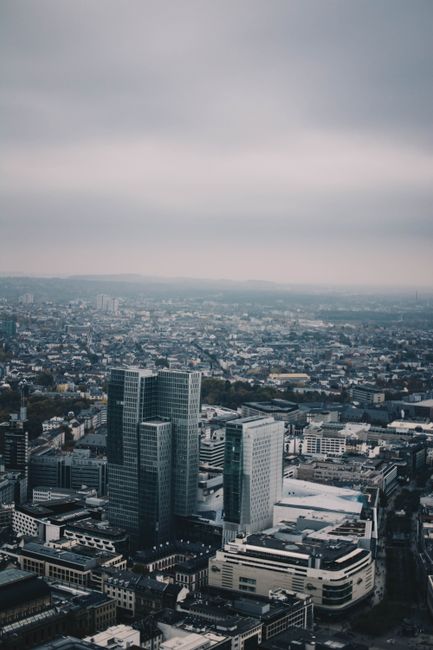
One of the first things you'll notice about Frankfurt is its stunning skyline. It's often referred to as "Mainhattan" because of its resemblance to Manhattan's skyline. These skyscrapers aren't just pretty to look at; they're a symbol of Frankfurt's economic power. Many of them house the headquarters of major banks, financial institutions, and consulting firms. Seeing those towering buildings always gives me a sense of awe. It's a visual representation of the city's financial might.
Some of the most iconic skyscrapers in Frankfurt include:
- Commerzbank Tower: Once the tallest building in Europe, the Commerzbank Tower is a landmark of Frankfurt's skyline.
- Messeturm: Known as the "Trade Fair Tower," the Messeturm is another iconic skyscraper that houses offices and exhibition space.
- Westend Tower: The Westend Tower is a modern skyscraper that houses the headquarters of DZ Bank.
- Main Tower: Offers public access to a viewing platform with stunning views of the city.
Beyond the Balance Sheets: Frankfurt's Cultural Side

Okay, so Frankfurt is a financial powerhouse. But it's not all about money and numbers! The city also has a vibrant cultural scene. There are numerous museums, art galleries, theaters, and music venues. After a long day of meetings, I often find myself unwinding at one of Frankfurt's many cultural attractions.
Here are a few of my favorite cultural spots in Frankfurt:
- Museumsufer: A collection of museums along the Main River, including the Städel Museum (art), the German Film Museum, and the Liebieghaus Skulpturensammlung (sculptures).
- Goethe House and Museum: The birthplace of Johann Wolfgang von Goethe, Germany's most famous writer.
- Alte Oper: Frankfurt's old opera house, now a concert hall.
- Palmengarten: A beautiful botanical garden with a wide variety of plants from around the world.
Apfelwein and Gemütlichkeit: The Local Flavors

And let's not forget the food! Frankfurt has a distinctive culinary identity, and one thing you absolutely have to try is Apfelwein (apple wine). It's a tart, slightly sour cider that's traditionally served in a Bembel (a grey stoneware jug) and drunk from a Geripptes (a glass with a diamond pattern). It might take some getting used to, but it's a true Frankfurt experience. I remember my first taste of Apfelwein – it was definitely an acquired taste, but now I love it!
You'll find Apfelwein served in traditional taverns called Apfelweinwirtschaften. These taverns are often cozy and welcoming, and they serve hearty German food to accompany the Apfelwein. Some popular dishes include Grüne Soße (green sauce), Handkäse mit Musik (a type of cheese with onions and vinegar), and Frankfurter Würstchen (Frankfurt sausages).
The Future of Frankfurt: Challenges and Opportunities

So, what does the future hold for Frankfurt? While the city is undoubtedly a financial powerhouse, it faces some challenges. The rise of FinTech, the increasing automation of financial services, and the potential relocation of financial institutions after Brexit are all factors that could impact Frankfurt's future. However, Frankfurt also has some significant opportunities. Its strong economy, central location, and skilled workforce make it an attractive destination for businesses and investors. The city is also actively promoting FinTech innovation and developing new strategies to remain competitive in the global financial landscape.
Here are some of the key challenges and opportunities facing Frankfurt:
Challenges:
- Brexit: While some financial institutions have relocated to Frankfurt as a result of Brexit, there is still uncertainty about the long-term impact of Brexit on the city's financial sector.
- FinTech Disruption: The rise of FinTech companies is disrupting traditional financial services and creating new competition for Frankfurt's banks and financial institutions.
- Competition from Other Financial Centers: Frankfurt faces competition from other major financial centers, such as London, Paris, and New York.
- Housing Costs: Housing costs in Frankfurt have been rising rapidly in recent years, making it more difficult for people to afford to live in the city.
Opportunities:
- FinTech Hub: Frankfurt has the potential to become a leading FinTech hub in Europe, attracting startups and investors from around the world.
- Green Finance: The city is well-positioned to become a center for green finance, supporting the transition to a more sustainable economy.
- EU Leadership: As a major financial center in the Eurozone, Frankfurt is playing an increasingly important role in shaping EU economic policy.
- Infrastructure Investment: Ongoing investments in infrastructure, such as the expansion of the airport and the development of new transportation links, will enhance Frankfurt's attractiveness as a business location.
Is Frankfurt Worth a Visit? Absolutely!

Whether you're interested in finance, culture, or just experiencing a unique European city, Frankfurt has something to offer. It's a place where you can see cutting-edge skyscrapers next to historic half-timbered houses, where you can discuss complex financial transactions over a glass of Apfelwein, and where you can feel the pulse of the German and European economies. Don't let its reputation as a financial hub fool you – Frankfurt is a city with a soul.
So, if you're planning a trip to Germany, don't overlook Frankfurt. It's a city that deserves a closer look, and I guarantee you'll be pleasantly surprised. Who knows, maybe I'll see you sipping Apfelwein in Sachsenhausen someday!
Post a Comment