Exploring European History: A Journey Through Empires, Revolutions & Modernity

Exploring European History: A Journey Through Empires, Revolutions & Modernity
Hey there! Ever felt that tug to unravel the fascinating tapestry of European history? It's a wild ride, believe me. From the rise and fall of mighty empires to the seismic shifts of revolutions and the shaping of the modern world, Europe has been a stage for some seriously dramatic events. I've always been drawn to its stories, and I'm excited to share some of my insights with you. Let's dive in!
Ancient Beginnings: Laying the Foundation
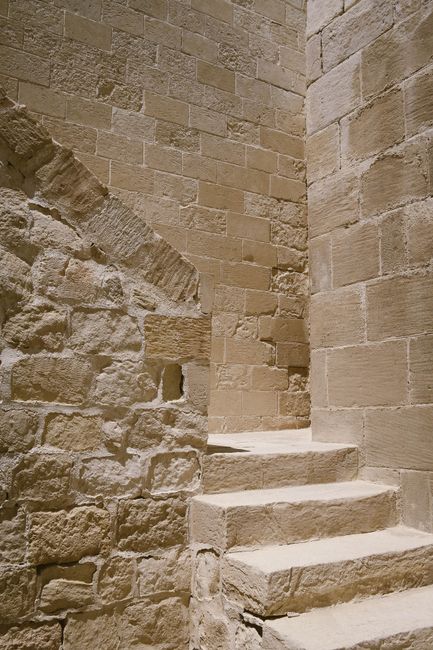
Okay, so we gotta start way back when. Think togas, gladiators, and philosophers. We're talking about Ancient Greece and the Roman Empire, the OG powerhouses of European civilization. These weren't just old societies; they laid the foundation for much of what we see in Europe today.
Ancient Greece, for example, gave us democracy (sort of – it wasn't exactly universal suffrage!), philosophy, literature, and some seriously impressive architecture. I mean, just imagine walking through the ruins of the Parthenon! They were pioneers in thinking critically about the world and exploring different ideas. Thinkers like Socrates, Plato, and Aristotle shaped Western thought for centuries to come. And let's not forget the Olympics! It's mind-blowing to think that this global event has its roots in ancient Greek athletic competitions.
Then came the Roman Empire. Talk about expansion! They conquered vast territories, stretching from Britain to North Africa, and brought with them their law, their language (Latin, the ancestor of many European languages!), and their engineering prowess. Their roads and aqueducts were engineering marvels of their time, and many still stand today. They weren't just about conquest, though. Roman law became the basis for legal systems across Europe, and their administrative skills allowed them to govern a vast and diverse empire. Of course, it wasn't all sunshine and roses. The Roman Empire had its share of internal strife, corruption, and ultimately, its decline.
Here are some key things I always associate with the Ancient world:
- Greek Philosophy: Socrates, Plato, Aristotle – the foundation of Western thought.
- Roman Law: Principles that still influence legal systems today.
- Architectural Marvels: Think of the Colosseum and the aqueducts!
The Middle Ages: Knights, Castles, and Faith
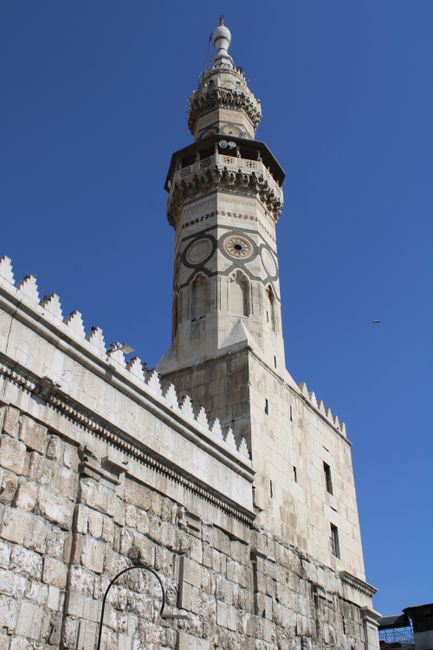
Alright, fast forward a few centuries. The Roman Empire has crumbled, and Europe enters the Middle Ages, sometimes called the Dark Ages (although that's a bit of a simplification, to be honest). This period is often romanticized with images of knights in shining armor, majestic castles, and courtly love. But it was also a time of upheaval, warfare, and significant social and religious change.
The rise of feudalism shaped the social structure. Lords owned land, and peasants worked it in exchange for protection. It was a hierarchical system, with the king at the top and everyone else fitting somewhere below. The Catholic Church was a dominant force, wielding immense political and spiritual power. Monasteries were centers of learning, preserving knowledge and culture through copying manuscripts. The Crusades, a series of religious wars, were launched to reclaim the Holy Land from Muslim control. While they ultimately failed in their main objective, they had a profound impact on European society, opening up trade routes and exposing Europeans to new ideas and cultures.
This era also saw the construction of magnificent cathedrals, like Notre Dame in Paris, testaments to the religious fervor and architectural skill of the time. And let's not forget the Black Death, a devastating plague that wiped out a huge portion of Europe's population in the mid-14th century. This pandemic had a profound impact on society, leading to labor shortages, social unrest, and a questioning of traditional religious beliefs.
To keep things organized, let's make a list:
- Feudalism: The social and political system of the Middle Ages.
- The Catholic Church: A powerful influence on society and politics.
- The Crusades: Religious wars with far-reaching consequences.
- The Black Death: A devastating pandemic that transformed Europe.
The Renaissance: A Rebirth of Culture and Learning

Next up is the Renaissance, a period of incredible artistic, intellectual, and cultural flourishing that began in Italy and spread throughout Europe. It literally means "rebirth," and it marked a renewed interest in classical Greek and Roman art, literature, and philosophy. Think Michelangelo's David, Leonardo da Vinci's Mona Lisa, and the writings of William Shakespeare. The Renaissance was a time of innovation, exploration, and a shift towards humanism, which emphasized human potential and achievement.
The invention of the printing press by Johannes Gutenberg was a game-changer. It allowed for the mass production of books, making knowledge more accessible and accelerating the spread of new ideas. This was a crucial factor in the Protestant Reformation, which challenged the authority of the Catholic Church and led to religious wars across Europe. Figures like Martin Luther and John Calvin spearheaded the Reformation, advocating for religious reform and challenging papal authority. This led to significant religious divisions and conflicts that shaped the political landscape of Europe for centuries to come.
The Age of Exploration also kicked off during this time, with European explorers sailing across the oceans in search of new trade routes and territories. Christopher Columbus's voyage to the Americas in 1492 had a profound and lasting impact on the world, opening up new opportunities for trade and colonization, but also leading to the exploitation and displacement of indigenous populations.
Here's a little breakdown of the key elements of the Renaissance:
- Artistic Masterpieces: The works of Michelangelo, Leonardo da Vinci, and Raphael.
- The Printing Press: Revolutionizing the spread of knowledge.
- The Protestant Reformation: Challenging the authority of the Catholic Church.
- The Age of Exploration: Expanding Europe's horizons.
The Age of Enlightenment: Reason and Revolution

The 18th century is often called the Age of Enlightenment, and for good reason. This was a time of intellectual ferment, where thinkers emphasized reason, individualism, and human rights. Philosophers like John Locke, Jean-Jacques Rousseau, and Immanuel Kant challenged traditional authority and advocated for political and social reform. Their ideas had a profound impact on the American and French Revolutions.
The French Revolution, which began in 1789, was a watershed moment in European history. Inspired by Enlightenment ideals, revolutionaries overthrew the monarchy and established a republic. It was a time of great upheaval and violence, but it also led to the spread of revolutionary ideas across Europe. Napoleon Bonaparte rose to power in the aftermath of the Revolution, conquering much of Europe and spreading French revolutionary principles. While he was eventually defeated, his impact on European law, administration, and nationalism was undeniable.
This period saw advancements in science, too. Think of Isaac Newton and his laws of motion and gravity! Science became a new way of understanding the world, challenging traditional religious explanations.
Let's recap what made the Enlightenment so special:
- Emphasis on Reason: A focus on logic and critical thinking.
- The French Revolution: Overthrowing the monarchy and establishing a republic.
- Scientific Advancements: New discoveries and a shift in understanding the world.
The 19th Century: Industrialization and Nationalism

The 19th century was a period of rapid change and transformation in Europe. The Industrial Revolution, which began in Britain, spread across the continent, transforming economies and societies. New technologies, like the steam engine and the power loom, led to mass production, urbanization, and the growth of factories. This also created a new class of industrial workers and led to social problems like poverty, pollution, and child labor.
At the same time, nationalism became a powerful force. People began to identify strongly with their nation, and this led to the unification of Italy and Germany. But it also fueled rivalries and tensions between European powers, which ultimately contributed to the outbreak of World War I.
There was also a lot of colonial expansion going on. European powers carved up Africa and Asia, seeking resources and markets for their manufactured goods. This had a devastating impact on the colonized regions, leading to exploitation, oppression, and the disruption of traditional societies.
Here's a quick rundown of the 19th century:
- The Industrial Revolution: Transforming economies and societies.
- Nationalism: Unifying nations but also fueling rivalries.
- Colonialism: European powers carving up the world.
The 20th Century: War, Division, and Integration

The 20th century was a tumultuous period in European history, marked by two World Wars, the Cold War, and the eventual integration of Europe. World War I, which began in 1914, was a devastating conflict that engulfed Europe and the world. It was a war of unprecedented scale and brutality, resulting in millions of casualties and the collapse of empires.
The Treaty of Versailles, which ended World War I, imposed harsh terms on Germany, which contributed to the rise of Nazism and the outbreak of World War II in 1939. World War II was even more destructive than World War I, resulting in the Holocaust, the systematic extermination of Jews and other minorities by the Nazi regime. The war ended in 1945 with the defeat of Germany and Japan, but it left Europe devastated and divided.
The Cold War, a period of geopolitical tension between the United States and the Soviet Union, divided Europe into two blocs: the West, aligned with the United States, and the East, aligned with the Soviet Union. The fall of the Berlin Wall in 1989 marked the end of the Cold War and the beginning of a new era of European integration. The European Union, which began as a trade agreement, has expanded to become a political and economic union of 27 European countries.
Let's break down the 20th century's key moments:
- World War I: A devastating conflict that reshaped Europe.
- World War II: Resulting in the Holocaust and the division of Europe.
- The Cold War: A period of geopolitical tension.
- The European Union: Integrating Europe economically and politically.
Modern Europe: Challenges and Opportunities
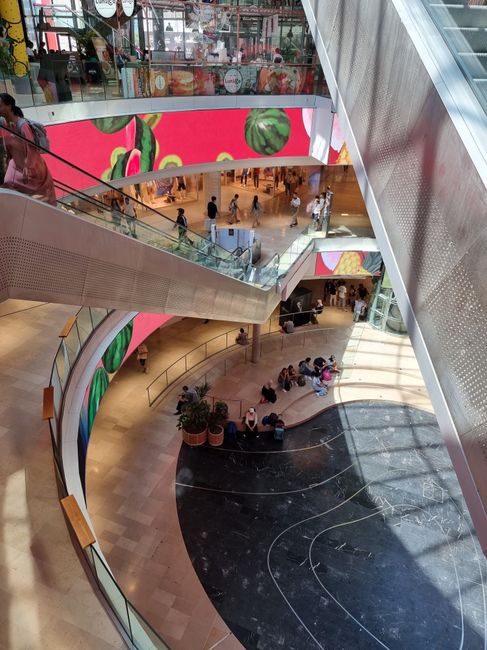
Today, Europe faces a range of challenges, including economic inequality, immigration, and terrorism. The rise of populism and nationalism in some countries also poses a threat to European integration. However, Europe also has many opportunities, including its strong economies, its commitment to human rights, and its cultural diversity.
The future of Europe is uncertain, but one thing is clear: its history continues to shape its present and its future. By understanding the past, we can better understand the challenges and opportunities that lie ahead.
I've learned so much exploring European history. It's more than just dates and battles; it's about understanding the forces that have shaped our world. I hope this has sparked your interest to delve even deeper! There are so many amazing stories waiting to be discovered. Happy exploring!
Post a Comment